
Role of protein electrostatics in enzymatic catalysis and enzyme design
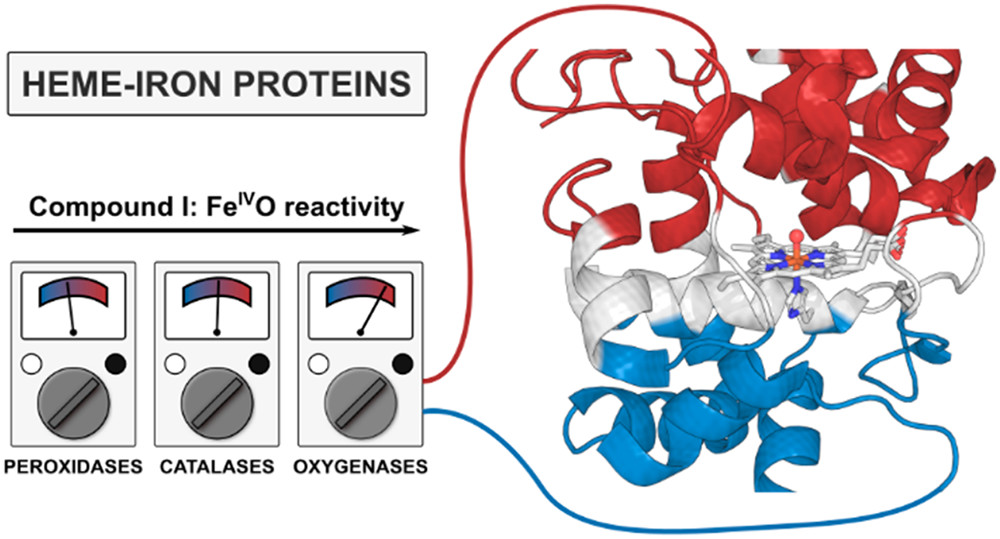
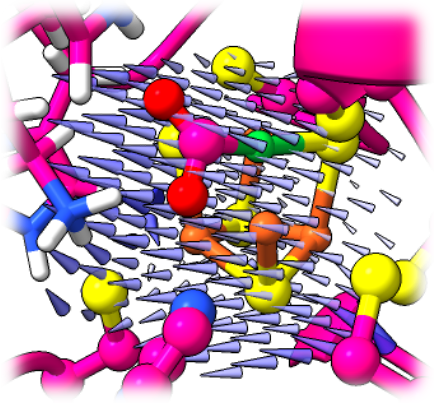
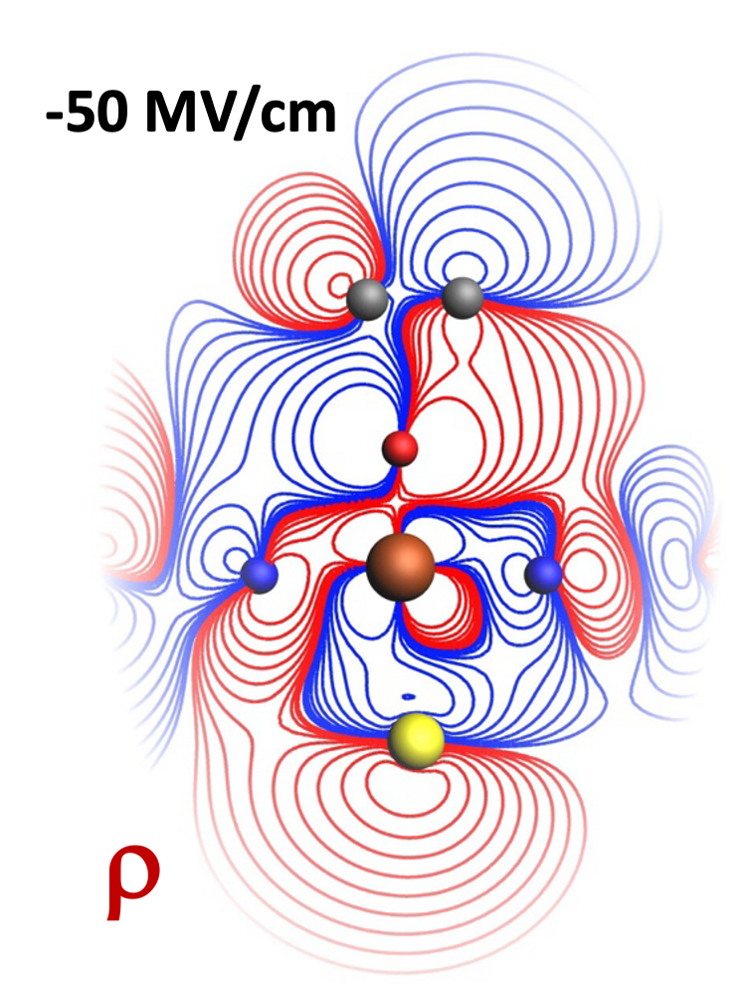
We develop methods to study the highly-heterogeneous, dynamic electric fields produced by the protein macromolecule and exerted onto the active site to promote enzymatic catalysis. To tease out the catalytically competent components of the fields, we combine molecular dynamics, QM/MM mechanistic studies, detailed studies of the geometry of the quantum mechanical electron density, with adapted tools of fluid mechanics, novel clustering algorithms, tensor algebra, and machine learning.
We find that fields unite protein classes despite disparity in size, overall structure, and organism of origin. Fields affect group transfer, metalloenzyme chemistry, electron transfer and more. Fields are critical to design for, in enzyme design. Therefore, we also develop inverse engineering tools to produce protein sequence for the desired catalytic field in the active site.
The efforts feature close ties with leading experimental groups in studies of natural enzyme, design of enzymes, and design of smaller enzyme mimics.
Key Publications:
Eberhart, M. E.; Alexandrova, A. N.; Ajmera, P.; Bím, D.; Chaturvedi, S.; Vargas, S.; Wilson, T Methods for Theoretical Treatment of Local Fields in Proteins and Enzymes. 2025, Chem. Rev., 125, 3772–3813. Download
Eberhart, M. E.; Wilson, T. R.; Jones, T.; Alexandrova, A. N. Electric fields imbue enzyme reactivity by aligning active site fragment orbitals. 2024, Proc. Natl. Acad. Sci., i121, e2411976121. Download
Chaturvedi, S. S.; Goswami, A.; Qian, J.; Petersen, A.; Ajmera, P.; Alexandrova, A. N. Distinct Electric Fields Enable Common Catalytic Function in Structurally Diverse Enzymes. 2025, J. Am. Chem. Soc. Download
Ajmera, P.; Vargas, S.; Chaturvedi, S. S.; Hennefarth, M. R.; Alexandrova, A. N. PyCPET – Computing Heterogeneous 3D Protein Electric Fields and Their Dynamics. 2025, J. Chem. Theor. Comput., 21, 4299-4308. Download
Vargas, S.; Chaturvedi, S.; Alexandrova, A. N. Machine-learning prediction of protein function from the portrait of its intramolecular electric field. 2024, J. Am. Chem. Soc., 146, 28375-28383. Download
Chaturvedi, S. S.; Vargas, S.; Ajmera, P.; Alexandrova, A. N. Directed Evolution of Protoglobin Optimizes the Enzyme Electric Field. 2024, J. Am. Chem. Soc., 146, 16670-16680. Download
Hassan, I.; Fuller, J. T.; Dippon, V.; Ta, A.; Danneman, M.; McNaughton, B.; Alexandrova, A. N.; Rovis, T. Improved Rh(III)-Catalysis by Through-Space Interactions via the Secondary Coordination Sphere of an Artificial Metalloenzyme. 2022, Chem. Sci., 13, 9220-9224. Download
Quantum biology of the eye in health and disease
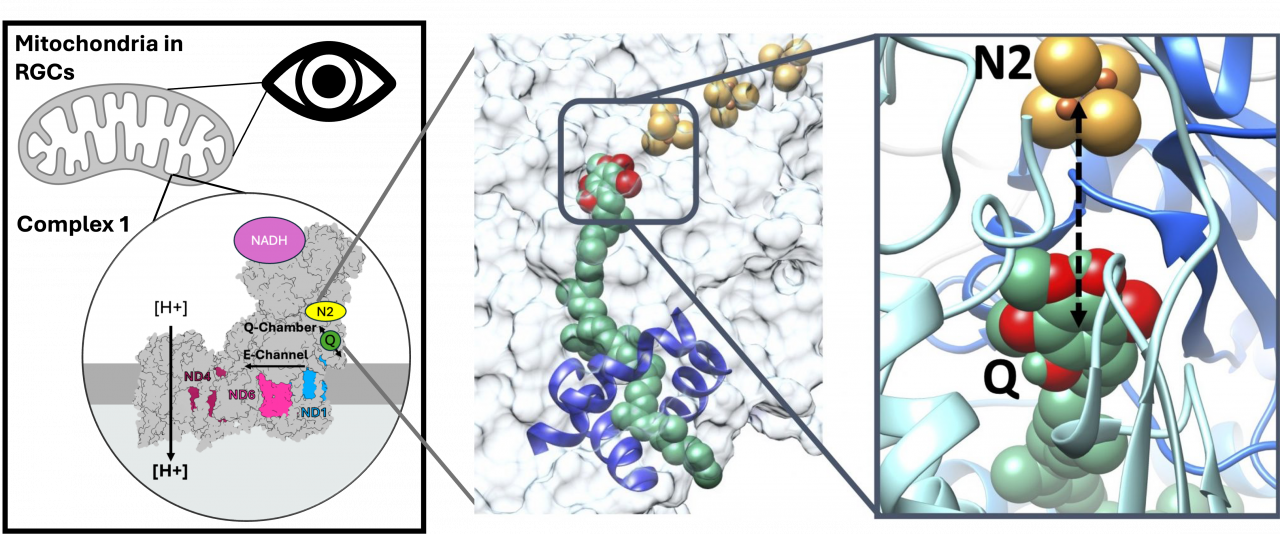
We study how remote and proximal mutations in mitochondrial complex I of the eye causes Leber Hereditary Optic Neuropathy (LHON) – the most common maternally inherited cause of blindness, affecting roughly 1 in thirty thousand individuals worldwide. This project features close collaboration with researchers in the Doheny Eye Institute at UCLA.
Key publications:
Fuller, J. T.; Barnes, S.; Sadun, L.; Ajmera, P.; Alexandrova, A. N.; Sadun, A. Coenzyme Q10 trapping in mitochondrial Complex I underlies Leber’s Hereditary Optic Neuropathy. 2023, Proc. Natl. Acad. Sci., 120, e2304884120. Download